
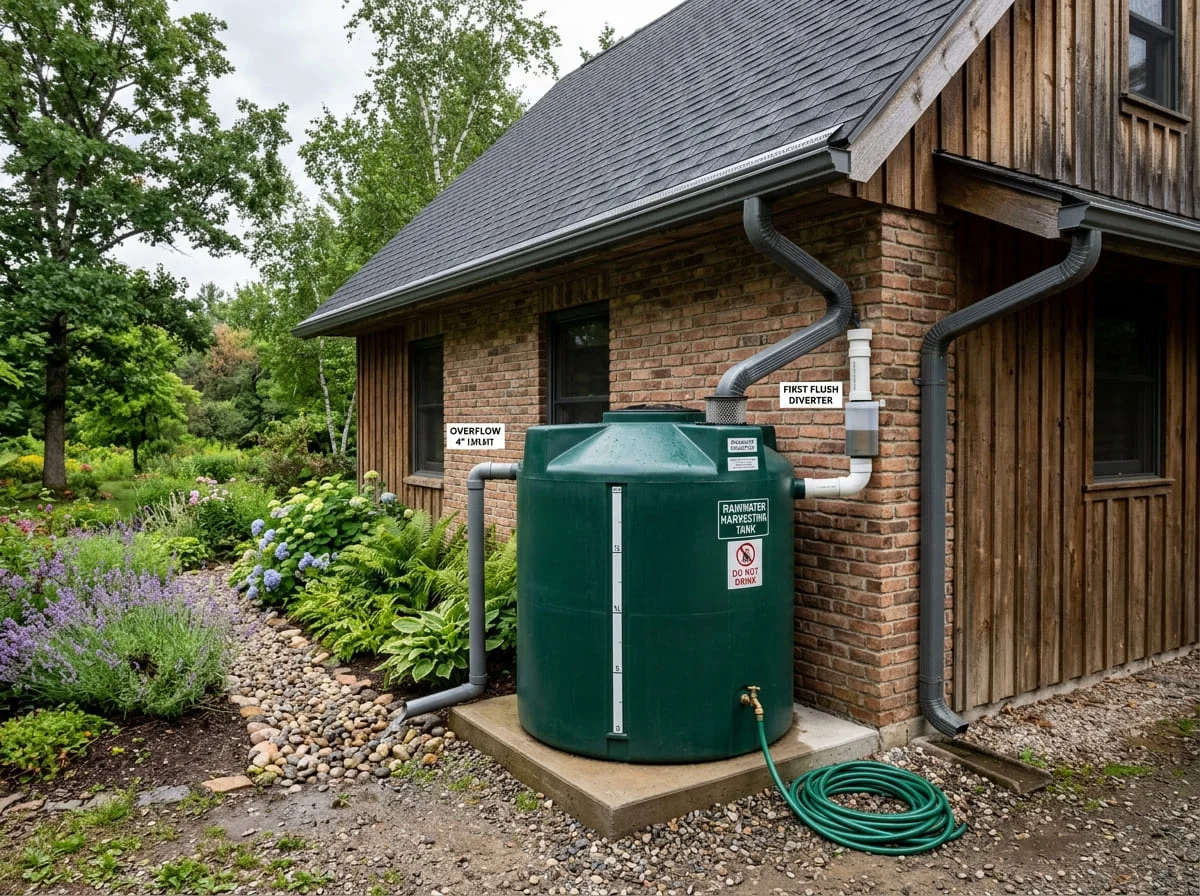
If you own a home in Texas, the rain that runs off your roof during a single storm is worth more than you think. The state actively rewards homeowners for catching and storing that water — through sales-tax exemptions, optional property-tax breaks, and city rebates that can put real money back in your pocket. And the entire system starts with something you may already have: your gutters.
This guide breaks down what’s available, how the programs work, and the gutter setup that turns a rainy afternoon into stored water for your lawn, garden, or home.
Rainwater harvesting is legal — and encouraged — in Texas
Unlike a handful of states that once restricted rainwater collection, Texas has gone the opposite direction. Harvesting rainwater is completely legal, and state law protects your right to do it. A homeowners association, city, or county cannot prohibit you from installing a rainwater system, though an HOA is allowed to set reasonable appearance standards for how tanks are placed or screened.
The reason is simple. Much of Texas swings between drought and downpour, and municipal water supplies stay under constant pressure as the population grows. Every gallon a homeowner captures off the roof is a gallon that doesn’t have to come out of a reservoir or aquifer. The state’s incentives exist to make that easy.
The tax breaks: two separate savings
Texas offers two distinct tax advantages for rainwater harvesting, and they stack.
Sales-tax exemption. Under Texas Tax Code Section 151.355, rainwater harvesting equipment and supplies are exempt from state sales tax. This is broader than most people realize — it covers the tanks and pumps, but also the gutters, downspouts, roof washers, and filters that move water from your roof into storage. To claim it, you typically provide the seller a completed exemption certificate at the time of purchase, so ask the retailer how they handle it and keep your paperwork.
Property-tax exemption (local option). The Texas Constitution and Tax Code allow local taxing units to exempt part or all of the assessed value tied to water-conservation improvements, which can include rainwater systems. This one is not automatic and not offered everywhere — it’s a local decision — so you’ll need to check with your county appraisal district to see if your area participates.
City and regional rebates: cash back per gallon
On top of the tax breaks, several Texas cities and water districts pay rebates based on how much storage capacity you install. Programs change from year to year and funding runs out, so treat the figures below as a guide and confirm current terms with your local water utility before you buy anything.
| Program | Typical rebate structure | Notes |
|---|---|---|
| Austin | Around $1.00 per gallon of storage, up to roughly $2,000 | Has required a minimum storage size (about 500 gallons) |
| San Antonio (SAWS) | Roughly $0.50/gallon non-pressurized, $1.00/gallon pressurized | Often capped at a share of total system cost |
| Regional groundwater conservation districts | Up to about $5,000 in some districts | Varies widely by district; some offer lifetime reimbursements |
The pattern is clear: the more storage you install, the more you can recover, and pressurized systems (the kind that can actually run drip irrigation) tend to earn the higher rate. Even a modest 500-gallon setup can qualify for a meaningful rebate in the right city.
Where your gutters come in
Here’s the part most rebate guides skip: a rainwater system is only as good as the gutters feeding it. The tank gets the attention, but the collection happens at the roofline.
A working system needs three things in order:
- Gutters that catch the runoff. They have to be sized to your roof area and correctly pitched, or they overflow in a hard rain and dump the water on the ground instead of into your tank.
- Downspouts that route the water to a first-flush diverter or filter before it reaches storage.
- A tank sized to your rainfall and your intended use.
The failure point is almost always step one. Texas storms don’t fall gently — a single cell can drop several inches an hour — and gutters that were undersized at build, or that sag and leak, simply can’t keep up. When they overflow, you lose the very water you’re trying to capture. That’s why converting a home for rainwater collection often starts with a look at the gutters: upsizing to 6-inch troughs, adding a downspout, or sealing tired seams.
If your gutters aren’t up to it, that’s fixable. Proper gutter installation sized to your roof, seamless gutters that resist leaks at the joints, and sound downspout work are the foundation of any system that will actually fill a tank — and, conveniently, those same gutters and downspouts qualify for the sales-tax exemption.
Is it worth it? A quick reality check
For most Texas homeowners, the math works out over time rather than overnight. The rebates and tax exemptions meaningfully cut the upfront cost, and stored rainwater is soft, chlorine-free, and free to use on landscaping — which is exactly where a lot of a Texas water bill goes in summer. Roughly every inch of rain on a 1,000-square-foot roof yields around 600 gallons, so even a few storms fill a lot of capacity in a wet season.
If your main goal is protecting your home rather than watering the garden, the same gutter upgrades pay off a different way: by keeping storm water off your foundation. Either way, it starts at the roofline.
Getting started
The smart order of operations is: confirm your local rebate and tax programs with your water utility and county appraisal district, decide how much storage you want, and make sure your gutters can actually feed it. If you’re not sure your current setup can handle Texas rain — let alone route it into a tank — that’s worth a professional look before you invest in tanks and pumps.
If you’d like your gutters and downspouts sized and sealed to feed a rainwater system, reach out for a free estimate and we’ll get it handled.