
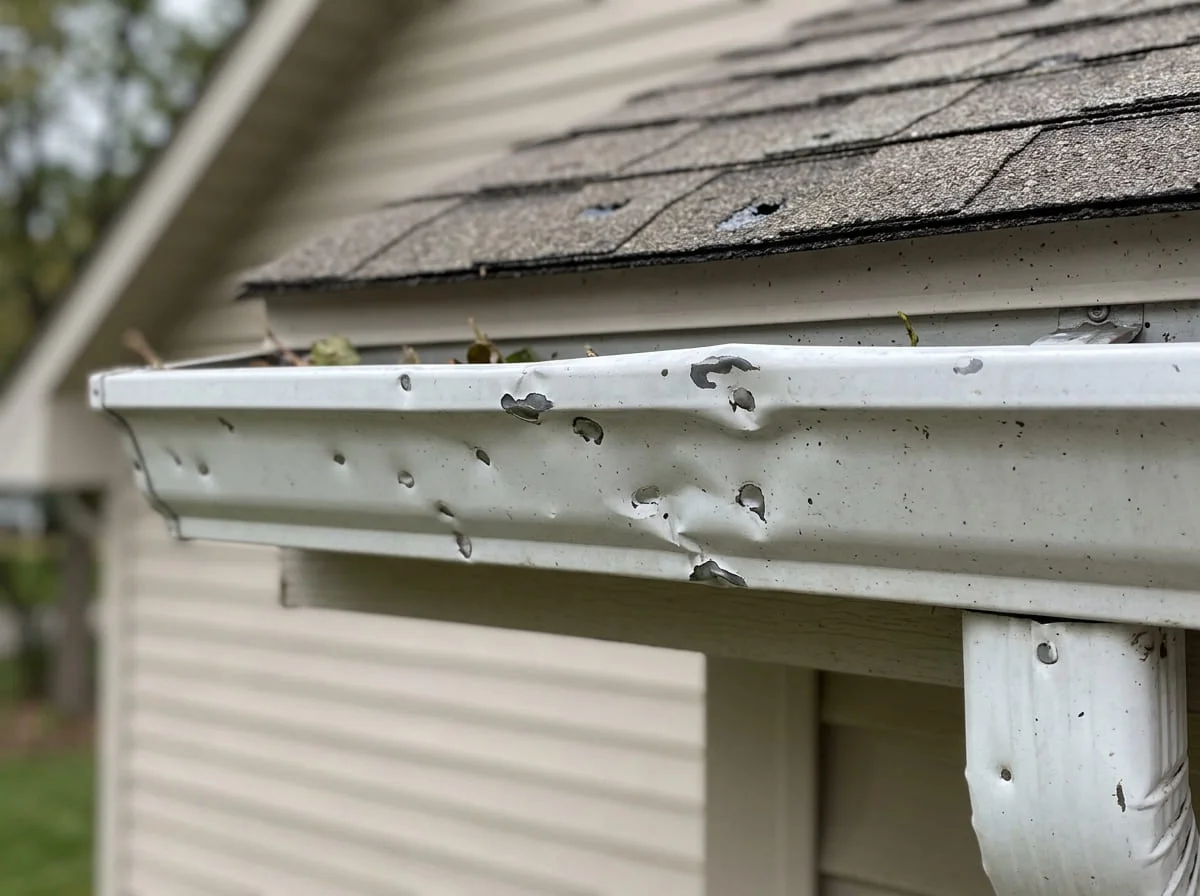
Texas gets more damaging hail than almost any state, and gutters take a beating every storm season. Softball-sized hail dents troughs, knocks downspouts loose, and batters the roof edge. The good news is that homeowners insurance often covers it. The catch is that “often” hides a lot of fine print — and a few traps that cost Texas homeowners money every year.
Here’s what’s typically covered, what isn’t, and how to handle a gutter hail claim without leaving money on the table. (This is general information, not insurance or legal advice — your policy is the final word, so read it or ask your agent.)
The short answer: usually yes
On most Texas homeowners policies, hail is a named peril — meaning it’s specifically listed as something the policy covers. So hail damage to your gutters, downspouts, and roof is generally covered, along with wind, and other storm-related perils.
But “generally covered” comes with three big qualifiers: the cosmetic-damage exclusion, the wind-and-hail deductible, and the maintenance line insurers draw between storm damage and wear. Miss any one of them and a claim can stall or get denied.
Trap #1: cosmetic damage may be excluded
This is the one that surprises people most. Many Texas policies exclude cosmetic damage to exterior features like gutters — dents or discoloration that change how they look but don’t affect how they work.
So the distinction that matters to an adjuster is:
- Cosmetic: surface dents and dings that don’t impair drainage. Often excluded.
- Functional: dents that block or restrict water flow, sections knocked loose from the fascia, split seams, or crushed downspouts. Much more likely to be covered.
The line isn’t always obvious from the ground, which is exactly why documentation matters. A close inspection can show that what looks cosmetic is actually restricting flow or has compromised a seam — the kind of detail that moves a claim from “denied” to “covered.”
Trap #2: the percentage deductible
Most people picture a flat deductible — say, $1,000. But many Texas policies apply a percentage deductible specifically to wind and hail, commonly around 1% or 2% of the home’s insured value.
Do the math and it changes everything:
| Home insured for | 1% deductible | 2% deductible |
|---|---|---|
| $300,000 | $3,000 | $6,000 |
| $400,000 | $4,000 | $8,000 |
| $500,000 | $5,000 | $10,000 |
Here’s why it matters for gutters: if hail only damaged your gutters and the repair runs, say, $1,500, but your wind/hail deductible is $4,000, filing a claim gains you nothing — you’d pay the whole repair yourself anyway, and you’d have a claim on your record. Gutter claims usually make sense only when the roof and other components were hit in the same storm, pushing the total well above the deductible.
Trap #3: storm damage vs. wear and tear
Insurance covers sudden damage from a covered event. It does not cover the slow decline of an old system. If your gutters were already rusted, sagging, or pulling loose before the storm, an insurer can argue the damage is maintenance, not hail — and deny the claim.
Two things protect you here: keeping your gutters in sound condition, and documenting the storm quickly so there’s a clear before-and-after tied to a specific date.
A note for coastal homeowners
If your home is near the Texas Gulf Coast, be aware that a standard homeowners policy in high-risk coastal areas may not include windstorm and hail coverage at all — it’s sometimes carried separately. If you’re on the coast, confirm whether wind/hail is on your main policy or a separate one before you assume you’re covered.
How to handle a gutter hail claim the right way
If a storm has come through, work the process in order:
- Document immediately. Photograph the damage from multiple angles and note the storm date. The sooner, the better — delay invites disputes.
- Check your deductible. Know your wind/hail percentage before you decide whether a claim is worth filing.
- Get a professional inspection. An itemized assessment of what’s functional vs. cosmetic, and repair vs. replace, is what an adjuster needs — and it often catches damage you can’t see from the yard.
- Report promptly. Don’t sit on it. Policy and state timelines apply, and waiting weakens your position.
- Repair or replace based on extent. Isolated dents can often be handled with gutter repair; widespread damage across long runs usually calls for gutter replacement, which is also cleaner to document.
Repair, replace, or wait?
If the damage is limited — a dented section, a downspout knocked loose — a targeted repair may be all you need, and it may fall below your deductible anyway. If hail has hammered the whole roofline, replacement is usually the smarter move, both for performance and for a claim. Crushed or detached downspouts, in particular, should be addressed quickly, since downspout damage sends storm water straight to your foundation.
The right first step is knowing exactly what you’re dealing with. A clear, itemized inspection tells you whether to file, whether to repair or replace, and gives you the paperwork to back it up.
If a Texas hailstorm has left your gutters dented or hanging, contact us for a free estimate and we’ll document the damage and lay out your options.